Global ISO Certification Consultant Services – Qualitcert

QualitCert Get a Quote

ISO Certifications

zarqa

Consulting &

ISO Certifications

-ISO Certification-

VAPT Certification Company in Zarqa

QUALIT

CERT

CONSULTING AND ISO CERTIFICATIONS

Strong cybersecurity solutions are available from Qualitcert, a top Zarqa VAPT (Vulnerability Assessment and Penetration Testing) certification supplier, to assist companies in protecting their digital infrastructure. Qualitcert guarantees that businesses adhere to fundamental cybersecurity requirements by locating and fixing vulnerabilities in networks, systems, and apps, strengthening their defenses against possible attackers. Their all-inclusive VAPT services include thorough evaluations and mock attacks to identify vulnerabilities, followed by practical advice to fortify security protocols. With a staff of highly qualified cybersecurity experts, Qualitcert offers dependable, superior solutions that enable Zarqa organizations to remain safe in a world that is becoming more and more digitalized.

Please Reach Us Today

Test
afd9a249 perf wp theme group 8796

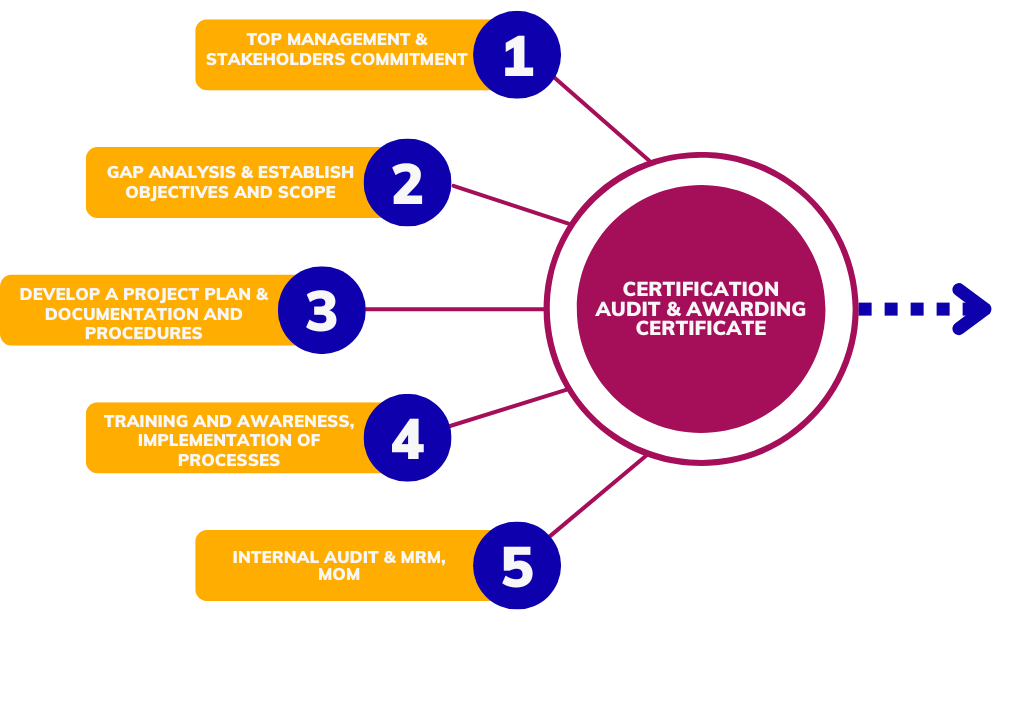
Approach and Methodology used to implement Management System Standard

Colorful Minimalist Linear Steps Circular Diagram 1 e1712599893569

Implementing an ISO  standards involves a structured methodology to ensure that the organization effectively meets the requirements of the chosen standard and achieves certification. Sometimes defined methodology may vary depending on factors such as the size of the organization, its industry, and the complexity of the ISO standard being implemented, the following steps provide a basic framework

Ellipse 6 copy

OUR

Process

1, Determine the ISO Standard

2. Understand the Requirements

3. Training and Awareness

4. Implement the System

5. Internal Audit

6. Certification

partner_img

Benefits of having ISO Certification

Enhanced Credibility and Reputation

Legal and Regulatory Compliance

Enhanced Customer Satisfaction

Access to Global Markets

Environmental Sustainability

Information Security

Our Achievements and Success

Professional Experts
0 +
Years Experience
0 +
Projects
0 +
Satisfied Customers
0 %

Our Clients

WhatsApp Image 2023 05 12 at 8.24.31 PM e1684164170667
WhatsApp Image 2023 05 12 at 8.16.53 PM e1684163940587
WhatsApp Image 2023 05 12 at 8.22.55 PM
WhatsApp Image 2023 05 12 at 8.04.13 PM 3 e1684163886384
WhatsApp Image 2023-05-12 at 8.15.32 PM

OUR

SERVICES

ISO 9001 Certification
ISO 45001 Certification
ISO 14001 Certification
ISO 22000 Certification
ISO 13485 Certification
ISO 27001 Certification
ISO 20000-1 Certification
ISO 29001 Certification
Technical Security Testing for Zarqa

VAPT Certification Company in Zarqa for Vulnerability Assessment, Penetration Testing and Remediation Readiness

VAPT helps Zarqa organizations identify technical vulnerabilities, validate exploitation risk, prioritize remediation and improve security control effectiveness across networks, applications, cloud systems and endpoints.

A technical assessment that tests real exposure

VAPT certification company services in Zarqa focus on vulnerability assessment and penetration testing. A vulnerability assessment identifies weaknesses; penetration testing goes further by safely validating whether weaknesses can be exploited and what business impact could result.

This service is different from ISO 27001 or SOC 2. Those frameworks assess management systems and control criteria, while VAPT provides technical evidence about exposed systems, misconfigurations, insecure applications, outdated software, weak authentication, open ports, privilege escalation paths and exploitable flaws.

Zarqa organizations using ERP systems, customer portals, warehouse platforms, remote access, cloud services, Wi-Fi, industrial networks or web applications can use VAPT to reduce attack exposure and support customer security requirements.

A useful VAPT engagement must define scope clearly: IP ranges, domains, applications, APIs, cloud assets, testing windows, credentials, exclusions, rules of engagement and reporting expectations. Without clear scope, testing may miss critical assets or create operational disruption.

Qualitcert supports VAPT readiness and coordination by helping organizations define scope, prepare asset lists, review risk priorities, understand findings, plan remediation, verify closure and align technical testing results with broader security frameworks.

Cyber Risk Context

Why VAPT Matters for Zarqa Organizations

Digital operations in industrial, logistics, healthcare, laboratory and service businesses depend on systems that can become targets if weaknesses are not found and corrected.

A business may have firewalls, antivirus and user policies but still carry exploitable weaknesses. Common issues include outdated services, weak passwords, exposed remote access, insecure file permissions, missing patches, poor input validation, default accounts and misconfigured cloud storage.

Vulnerability assessment provides breadth. It scans and reviews assets to identify weaknesses. Penetration testing provides depth by simulating attacker behavior within agreed limits to understand whether a weakness can lead to unauthorized access, data exposure or service disruption.

The most valuable VAPT reports explain risk in business language. A finding should not only list a CVE or screenshot; it should explain affected asset, evidence, likelihood, impact, remediation step, priority and retest status.

For regulated or customer-facing service providers, VAPT can support ISO 27001, SOC 2, PCI DSS or client security questionnaires. However, technical testing should be treated as part of continual security improvement, not a once-a-year formality.

Remediation ownership is critical. IT, application owners, vendors and management should agree timelines based on severity, exploitability, system criticality and business constraints.

Preparation should include an accurate asset inventory because unknown assets cannot be tested or protected. Domains, subdomains, APIs, VPN endpoints, cloud resources, wireless networks and internal systems should be reviewed before scope is finalized.

Rules of engagement should protect operations by defining testing windows, contacts, limitations, notification requirements and emergency stop conditions. This is especially important for production systems or services supporting customers.

Risk management should not end with a severity score. Findings should be prioritized by exploitability, exposure, asset criticality, data sensitivity, compensating controls and business impact.

After remediation, retesting should confirm closure. Lessons learned should update secure configuration standards, patch routines, development practices, access reviews and monitoring controls so the same issues do not return.

A comprehensive VAPT program should include pre-test backups, stakeholder notification and escalation plans. These controls reduce operational risk and make sure the organization can respond if testing uncovers an urgent exposure.

Findings should be translated into corrective actions that technical owners can implement. A good remediation plan separates quick configuration fixes, patching, code changes, architectural issues and policy improvements.

Continual improvement happens when repeated findings are analyzed. If the same vulnerability class returns after retesting, the organization may need stronger secure development, configuration baselines, patch governance or supplier controls.

Required evidence should include business approval for testing. Written authorization, contacts and scope protect both the tester and the organization, especially when testing internet-facing systems or production applications.

Best practice is to review critical findings with both technical and business stakeholders. This helps management understand whether downtime, data exposure, regulatory impact or customer commitments are at risk.

Management review should use VAPT results to decide whether budgets, tooling, development practices, supplier requirements or security awareness need to change. Testing has more value when it influences prevention.

For audit readiness, remediation records should show dates, responsible owners, action taken, evidence of fix and retest result. This turns a technical report into a managed security improvement file that can support ISO 27001, SOC 2 or customer reviews.

Technical Assurance Value

VAPT Benefits for Zarqa Businesses

VAPT creates practical security value when findings are prioritized, fixed and verified.

Clear vulnerability visibility

Organizations gain a structured view of weaknesses across systems, applications, networks, cloud assets or exposed services.

Validated exploitation risk

Penetration testing helps distinguish theoretical weaknesses from vulnerabilities that can create real business impact.

Prioritized remediation

Risk ratings, evidence and remediation guidance help teams focus effort on the most critical issues first.

Improved compliance support

VAPT evidence can support security requirements in ISO 27001, SOC 2, PCI DSS and customer assurance reviews.

Testing Applications

Where VAPT Applies in Zarqa Technology Environments

The testing scope should match the assets and threats that matter most to the organization.

01

External network testing

Assess internet-facing IPs, firewalls, VPNs, remote access, exposed services and perimeter weaknesses.

02

Web application testing

Test authentication, authorization, session management, input validation, file upload, business logic and data exposure risks.

03

Internal network testing

Identify privilege escalation, lateral movement, weak configurations, patch gaps and insecure internal services.

04

Cloud and SaaS review

Review cloud misconfigurations, access policies, storage exposure, logging, key management and security settings.

05

API security testing

Assess authentication, rate limiting, object-level authorization, input validation and sensitive data exposure.

06

Retesting and closure

Verify that critical and high-risk findings are fixed and that remediation evidence is complete.

VAPT Engagement Route

How Vulnerability Assessment and Penetration Testing Is Structured

A professional VAPT engagement should be scoped, authorized, tested, reported, remediated and verified.

01

Scope assets

Define IP ranges, domains, applications, credentials, testing windows, exclusions and rules of engagement.

02

Discover weaknesses

Use vulnerability scanning, manual review and configuration checks to identify technical weaknesses.

03

Validate risk

Perform controlled penetration testing to confirm exploitability, impact and attack paths within agreed limits.

04

Report findings

Document evidence, severity, affected assets, business impact, remediation guidance and prioritization.

05

Remediate issues

Assign findings to owners, patch systems, change configurations, update code or strengthen controls.

06

Retest closure

Verify remediation, update the risk register and retain evidence for audit or customer assurance needs.

VAPT Evidence

Documents, Records and Outputs Needed for VAPT Readiness

Technical testing should leave clear evidence that the organization can use for remediation and audit support.

Typical Records

  • Approved VAPT scope document
  • Rules of engagement and authorization
  • Asset inventory and target list
  • Credential and test account records
  • Vulnerability assessment report
  • Penetration testing report
  • Risk-rated finding register
  • Evidence screenshots or proof details
  • Remediation action plan
  • Patch and configuration change records
  • Retest report and closure evidence
  • Lessons learned and improvement log
VAPT reports should be protected as sensitive documents because they describe exploitable weaknesses and system details.

VAPT Mistakes to Avoid

The value of VAPT drops when testing is poorly scoped or findings are not remediated.

  • Testing only a small sample of assets while critical systems remain outside the scope.
  • Running automated scans without manual validation or business impact explanation.
  • Ignoring medium findings that create risk when combined with other weaknesses.
  • Closing findings without retesting or evidence of configuration, patch or code changes.
  • Sharing full technical reports broadly without access control or confidentiality safeguards.
Best practice is to treat VAPT as a cycle: test, fix, retest, update controls and use lessons learned for prevention.
Related Zarqa Security Services

VAPT findings can feed the risk treatment plan and control monitoring under ISO 27001 certification services in Zarqa.

Service organizations can use VAPT evidence to support security criteria readiness for SOC 2 certification services in Zarqa.

Payment-related environments may need vulnerability and penetration testing aligned with PCI DSS certification services in Zarqa.

FAQs

VAPT Questions from Zarqa Businesses

These answers explain vulnerability assessment, penetration testing, scope, reports and remediation.

What is VAPT?

VAPT means vulnerability assessment and penetration testing. It identifies technical weaknesses and validates whether selected weaknesses can be exploited under controlled conditions.

How is vulnerability assessment different from penetration testing?

Vulnerability assessment identifies and prioritizes weaknesses, while penetration testing safely attempts to exploit weaknesses to confirm risk and business impact.

Which systems can be tested?

External networks, internal networks, web applications, APIs, cloud services, wireless networks, remote access systems and selected endpoints can be included depending on scope.

Why do Zarqa businesses need VAPT?

Businesses use VAPT to find technical weaknesses before attackers do, support customer security requirements and improve compliance readiness for security frameworks.

What should be defined before testing?

Scope should define assets, IP ranges, applications, credentials, testing windows, exclusions, rules of engagement and communication contacts.

What does a VAPT report include?

A report usually includes findings, evidence, severity, affected assets, exploitation details where safe, business impact, remediation guidance and retest status.

Is VAPT a replacement for ISO 27001?

No. VAPT is technical testing, while ISO 27001 is an information security management system. VAPT can support ISO 27001 risk treatment and monitoring.

How often should VAPT be performed?

Frequency depends on risk, customer requirements, system changes and compliance needs. Testing is often repeated after major changes or at planned intervals.

What happens after findings are reported?

The organization should assign owners, fix vulnerabilities, document actions and perform retesting for critical or high-risk findings.

How does Qualitcert support VAPT in Zarqa?

Qualitcert supports scope planning, readiness coordination, finding interpretation, remediation planning, retest coordination and alignment with security compliance frameworks.

Speak with Qualitcert

Plan VAPT Readiness for Zarqa Systems and Applications

Share your asset scope, applications and customer security expectations. Qualitcert can help coordinate VAPT preparation, remediation tracking and audit-ready evidence.

Request a Consultation →
Scroll to Top