









Global ISO Certification Consultant Services – Qualitcert

QualitCert Get a Quote

ISO Certifications

ken

ya

Consulting &

ISO Certifications

-ISO Certification-

VAPT Certification Company in Kenya

QUALIT

CERT

CONSULTING AND ISO CERTIFICATIONS

Qualitcert offering VAPT certification services in Kenya, to assists companies in protecting their IT infrastructure from possible security risks. To find vulnerabilities in your networks, apps, and systems, our knowledgeable staff performs thorough inspections. This guarantees that all flaws are fixed before they can be used against you. Focusing on both automated and manual testing, we provide customized solutions that satisfy your company’s unique security requirements while upholding international standards. Qualitcert improves total data security and compliance by protecting your business from cyber threats, regardless of whether you work in the healthcare, finance, or other sectors. Together, we can strengthen your company’s security posture and help you confidently obtain VAPT accreditation in Kenya.

Please Reach Us Today

Test
afd9a249 perf wp theme group 8796

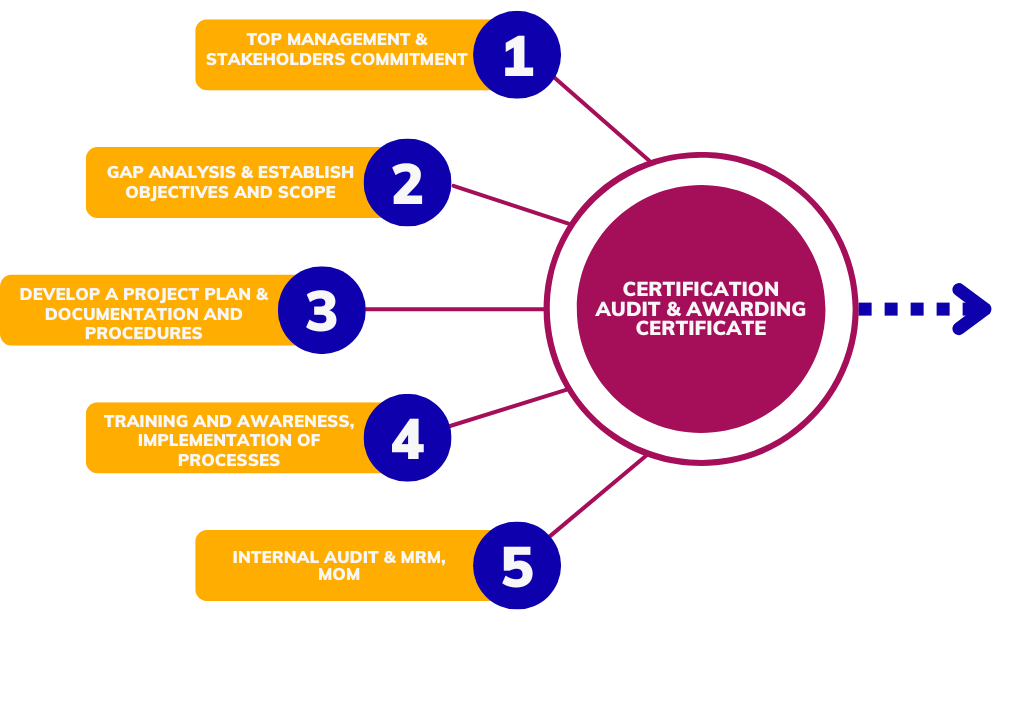
Approach and Methodology used to implement Management System Standard

Colorful Minimalist Linear Steps Circular Diagram 1 e1712599893569

Implementing an VAPT standards involves a structured methodology to ensure that the organization effectively meets the requirements of the chosen standard and achieves certification. Sometimes defined methodology may vary depending on factors such as the size of the organization, its industry, and the complexity of the VAPT standard being implemented, the following steps provide a basic framework

Ellipse 6 copy

OUR

Process

1, Determine the ISO Standard

2. Understand the Requirements

3. Training and Awareness

4. Implement the System

5. Internal Audit

6. Certification

partner_img

Benefits of having ISO Certification

Enhanced Credibility and Reputation

Legal and Regulatory Compliance

Enhanced Customer Satisfaction

Access to Global Markets

Environmental Sustainability

Information Security

Our Achievements and Success

Professional Experts
0 +
Years Experience
0 +
Projects
0 +
Satisfied Customers
0 %

Our Clients

WhatsApp Image 2023 05 12 at 8.24.31 PM e1684164170667
WhatsApp Image 2023 05 12 at 8.16.53 PM e1684163940587
WhatsApp Image 2023 05 12 at 8.22.55 PM
WhatsApp Image 2023 05 12 at 8.04.13 PM 3 e1684163886384
WhatsApp Image 2023-05-12 at 8.15.32 PM

OUR

SERVICES

ISO 9001 Certification
ISO 45001 Certification
ISO 14001 Certification
ISO 22000 Certification
ISO 13485 Certification
ISO 27001 Certification
ISO 20000-1 Certification
ISO 29001 Certification
Technical Security Testing in Kenya

VAPT Services in Kenya for Vulnerability Discovery and Controlled Penetration Testing

Vulnerability Assessment and Penetration Testing identifies technical weaknesses, validates realistic attack paths and gives teams prioritised remediation evidence.

Find weaknesses, test exploitability and verify the fix

Vulnerability Assessment and Penetration Testing combines two related technical activities. Vulnerability assessment identifies known weaknesses across an agreed asset set, while penetration testing safely attempts to validate exploitability, attack paths and business impact.

A scan alone is not a complete penetration test. Effective work combines asset discovery, automated analysis, manual verification, application logic testing and controlled exploitation under written rules of engagement.

Scope is critical. Internet-facing systems, internal networks, web applications, APIs, mobile applications, cloud environments and wireless systems each require different testing methods, credentials, timing and safeguards. Exclusions and stop conditions should be agreed before testing starts.

Qualitcert supports Kenya organisations with scope definition, testing coordination, risk-ranked reporting, remediation planning and retesting. The goal is actionable technical evidence, not a long list of unverified scanner findings.

Kenya Digital Exposure

Testing internet, application and cloud attack surfaces

Fintech, e-commerce, healthcare, government suppliers, telecom and SaaS organisations depend on systems that change quickly and connect to third parties.

New releases, exposed APIs, cloud configuration and remote administration can introduce vulnerabilities even when policies are strong. VAPT provides point-in-time technical evidence of how controls behave under attack-oriented testing.

Authenticated assessment can reveal missing patches, insecure privileges and configuration weaknesses that external testing cannot see. External testing remains important for understanding what an unauthenticated attacker can discover and reach.

Testing should be integrated with remediation. Findings need owners, target dates, compensating controls and retest evidence, especially where vulnerabilities affect sensitive data or critical business services.

Security Testing Outcomes

What disciplined VAPT provides

The value comes from validated findings and clear remediation priorities rather than raw vulnerability counts.

Verified technical risk

Manual testing separates exploitable issues from false positives and low-value scanner noise.

Prioritised remediation

Severity, exposure, exploitability and business impact guide practical action sequencing.

Stronger customer assurance

Reports and retest evidence support due diligence, compliance and contractual security expectations.

Improved engineering feedback

Root causes and attack paths help development and infrastructure teams prevent recurrence.

Testing Scenarios

VAPT applications for organisations in Kenya

The testing method should match the asset type, threat model, authentication level and operational sensitivity.

01

Fintech and payment systems

Test web, mobile, API, authentication, transaction and privilege weaknesses under controlled conditions.

02

E-commerce platforms

Assess customer accounts, checkout flows, integrations, cloud exposure and data handling.

03

Healthcare systems

Evaluate portals, applications, devices, network segmentation and sensitive-data exposure.

04

SaaS providers

Test tenant isolation, access control, APIs, deployment configuration and administrative functions.

05

Government and enterprise suppliers

Assess external and internal attack surfaces before onboarding or contract renewal.

06

Telecom and managed services

Review network devices, management interfaces, cloud services, remote access and customer platforms.

Testing Methodology

A controlled route from scope to retest

The engagement protects operational stability while producing reproducible and decision-ready evidence.

01

Authorise and scope

Define assets, dates, methods, credentials, exclusions, contacts, data handling and stop conditions.

02

Discover the attack surface

Identify reachable hosts, services, applications, APIs, versions and exposed functionality.

03

Assess vulnerabilities

Use appropriate tools and manual analysis to identify configuration, code and control weaknesses.

04

Validate exploitation safely

Confirm material findings and attack paths without exceeding agreed operational limits.

05

Report and remediate

Document evidence, impact, severity, root cause and prioritised corrective recommendations.

06

Retest closed findings

Verify remediation, identify residual exposure and issue updated status evidence.

VAPT Deliverables

Technical records expected from a professional engagement

Deliverables should be suitable for executives, risk owners and technical teams without exposing unnecessary sensitive detail.

Typical VAPT documentation

  • Signed rules of engagement
  • Authorised asset list
  • Testing methodology
  • Credential and access plan
  • Finding evidence
  • Risk and severity rationale
  • Executive summary
  • Technical remediation guidance
  • Finding owner tracker
  • Retest confirmation report
Sensitive exploit details, credentials and screenshots should be handled through controlled channels and retained only as agreed.

Security testing mistakes

Poorly planned testing can produce misleading results or unnecessary operational risk.

  • Running scans without written authorisation and scope boundaries.
  • Calling automated scanning a full penetration test.
  • Testing only IP addresses while ignoring applications and APIs.
  • Ranking findings by scanner score without business context.
  • Closing findings from screenshots without a controlled retest.
Best practice includes safe coordination, validated evidence, clear ownership and retesting of material corrections.
Security Management Links

Testing results can feed the risk treatment process for ISO 27001 certification services in Kenya.

Service providers can use VAPT evidence within SOC 2 readiness in Kenya.

Corrective-action and change discipline can align with ISO 9001 certification services in Kenya.

VAPT FAQs

VAPT questions from organisations in Kenya

These answers explain scope, scanning, penetration testing, reporting and remediation.

What is the difference between vulnerability assessment and penetration testing?

Vulnerability assessment identifies potential weaknesses, while penetration testing manually validates exploitability and attack impact within authorised limits.

Is an automated scan enough for VAPT?

No. Automated tools are useful, but professional testing includes manual verification, logic testing, attack-path analysis and false-positive review.

What systems can be included in VAPT?

Scope may include external or internal networks, web applications, APIs, mobile apps, cloud environments and wireless systems.

Is VAPT safe for production systems?

It can be performed safely with agreed methods, timing, stop conditions and exclusions, but residual operational risk must be assessed before testing.

What is authenticated vulnerability testing?

It uses approved credentials to inspect patching, configurations and privileges that cannot be assessed accurately from an unauthenticated position.

How are vulnerabilities prioritised?

Priority should consider technical severity, exposure, exploitability, affected data or service, compensating controls and business impact.

What should a penetration-test report contain?

It should include scope, methodology, executive findings, technical evidence, risk rationale, remediation guidance and limitations.

Why is retesting important?

Retesting confirms that the specific weakness and related attack path were removed rather than relying only on implementation statements.

How often should VAPT be performed?

Frequency should reflect risk, system change, contractual obligations and threat exposure. Major changes can trigger testing outside the routine cycle.

How does Qualitcert support VAPT in Kenya?

Qualitcert can help define scope, coordinate testing, present prioritised findings, support remediation tracking and verify closure through retesting.

Validate Your Attack Surface

Scope a VAPT engagement around your highest-risk systems

Share your asset types, business-critical applications, preferred testing window and current concerns. Qualitcert can help plan controlled VAPT for your Kenya environment.

Request a VAPT Scoping Call →
Scroll to Top