










Global ISO Certification Consultant Services – Qualitcert

QualitCert Get a Quote

ISO Certifications

Saudi

Arabia

Consulting &

ISO Certifications

-ISO Certification-

QUALIT

CERT

ISO 9001 Certification & Consulting Service in Saudi Arabia

 Qualitcert – ISO 9001 certification is a globally recognized standard for quality management systems (QMS), and it plays a crucial role in ensuring that organizations consistently meet customer and regulatory requirements. In Saudi Arabia, the demand for ISO 9001 certification has grown steadily as businesses aim to enhance operational efficiency, improve customer satisfaction, and gain a competitive edge in local and international markets.

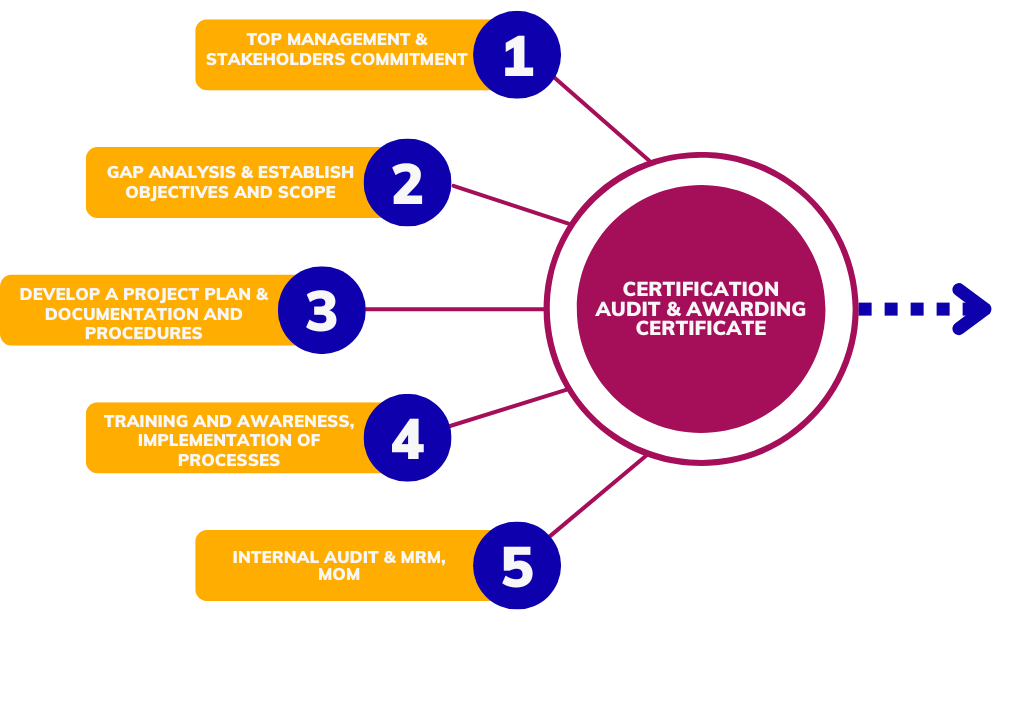
The ISO 9001 certification process in Saudi Arabia typically begins with a comprehensive assessment of the organization’s existing processes. This is followed by the implementation of a quality management system that aligns with ISO 9001:2015 standards. The implementation phase involves setting quality objectives, establishing procedures, and training staff to adhere to the system. ISO 9001 consultants play a vital role during this stage by providing expert guidance, identifying gaps, and ensuring all requirements are effectively addressed.

Hiring experienced ISO 9001 consultants in Saudi Arabia can significantly simplify the certification process. These professionals offer customized solutions tailored to the organization’s size, industry, and specific needs. They assist in developing essential documentation, including quality manuals, process flowcharts, and standard operating procedures. Proper documentation is critical not only for compliance but also for maintaining consistency and facilitating continuous improvement.

Once the quality management system is in place, the next step is ISO auditing. This includes both internal audits and an external audit conducted by an accredited certification body. Internal ISO auditing helps identify areas for improvement and ensures the organization is ready for the final assessment. The external audit evaluates the implementation and effectiveness of the QMS. Upon successful completion, the organization is awarded ISO 9001 certification.

The role of a reliable service provider in Saudi Arabia cannot be overstated. From the initial consultation to final certification, the service provider ensures a smooth and efficient process. They also help organizations maintain their certification by offering ongoing support and conducting periodic internal audits to ensure continuous compliance with ISO 9001 standards.

One of the most common concerns for organizations is the ISO 9001 cost. The cost varies based on several factors, including the size and complexity of the organization, the current level of process maturity, and the choice of ISO 9001 consultants and certification body. While the initial investment might seem significant, the long-term benefits—such as improved efficiency, reduced waste, enhanced customer satisfaction, and increased market credibility—far outweigh the costs.

In Saudi Arabia, ISO 9001 certification is particularly beneficial for companies looking to work with government entities or expand into international markets. Many clients and partners now require suppliers to be ISO certified, making it a strategic business move.

In conclusion, ISO 9001 certification in Saudi Arabia is an essential step for organizations aiming to improve quality management and build trust with stakeholders. With the support of skilled ISO 9001 consultants, effective implementation, thorough documentation, and strategic ISO auditing, achieving certification becomes a structured and achievable goal. Choosing the right service provider and understanding the ISO 9001 cost implications are key to a successful certification journey.

Please Reach Us Today

Test
afd9a249 perf wp theme group 8796

Approach and Methodology used to implement Management System Standard

Colorful Minimalist Linear Steps Circular Diagram 1 e1712599893569

Implementing an ISO  standards involves a structured methodology to ensure that the organization effectively meets the requirements of the chosen standard and achieves certification. Sometimes defined methodology may vary depending on factors such as the size of the organization, its industry, and the complexity of the ISO standard being implemented, the following steps provide a basic framework

Ellipse 6 copy

OUR

Process

1, Determine the ISO Standard

2. Understand the Requirements

3. Training and Awareness

4. Implement the System

5. Internal Audit

6. Certification

partner_img

Benefits of having ISO Certification

Enhanced Credibility and Reputation

Legal and Regulatory Compliance

Enhanced Customer Satisfaction

Access to Global Markets

Environmental Sustainability

Information Security

Our Achievements and Success

Professional Experts
0 +
Years Experience
0 +
Projects
0 +
Satisfied Customers
0 %

Our Clients

WhatsApp Image 2023 05 12 at 8.24.31 PM e1684164170667
WhatsApp Image 2023 05 12 at 8.16.53 PM e1684163940587
WhatsApp Image 2023 05 12 at 8.22.55 PM
WhatsApp Image 2023 05 12 at 8.04.13 PM 3 e1684163886384
WhatsApp Image 2023-05-12 at 8.15.32 PM

OUR

SERVICES

ISO 9001 Certification
ISO 45001 Certification
ISO 14001 Certification
ISO 22000 Certification
ISO 13485 Certification
ISO 27001 Certification
ISO 20000-1 Certification
ISO 29001 Certification
ISO 9001 in Saudi Arabia

ISO 9001: Build a Practical Quality Management System for Saudi Arabia

For organisations across Saudi Arabia, ISO 9001 provides a structured way to control processes, meet customer requirements and improve delivery performance, with controls adapted to national headquarters, industrial plants, ports, project sites, hospitals, warehouses, branches and technology operations.

ISO 9001 Implementation Aligned with the Operating Environment in Saudi Arabia

Saudi Arabia is a large national market with energy, petrochemicals, construction, logistics, mining, manufacturing, healthcare, tourism, finance and technology. Organisations pursuing ISO 9001 should therefore control processes, meet customer requirements and improve delivery performance in a way that fits activities such as oil, gas and petrochemicals, construction and infrastructure, logistics, ports and distribution, mining and manufacturing.

National organisations may coordinate headquarters, industrial cities, ports, regional branches, remote projects and large supplier networks. A practical quality management system should connect customer requirements, process ownership, supplier performance, delivery records and corrective action with clear responsibilities, reliable records and management review.

Qualitcert supports organisations in Saudi Arabia by adapting the implementation work to products, services, departments, customer requirements, suppliers, branches and outsourced processes. The service focuses on practical preparation, documented controls, internal review and readiness for the relevant independent assessment.

Saudi Arabia Business Priorities

Implementation Priorities for ISO 9001 in Saudi Arabia

The system should reflect national multi-site operations, industrial cities and ports, large project and contractor networks and regional branches and shared services.

Customer Requirement Control

Confirm requirements before commitment and manage changes, communication and acceptance criteria. In Saudi Arabia, this is especially relevant where organisations manage national multi-site operations.

Process Ownership

Assign accountable owners, inputs, outputs, measures and controls for key business processes. In Saudi Arabia, this is especially relevant where organisations manage industrial cities and ports.

Supplier Performance

Select, monitor and re-evaluate external providers based on their effect on product or service quality. In Saudi Arabia, this is especially relevant where organisations manage large project and contractor networks.

Corrective Action

Investigate recurring problems, address root causes and verify that corrective actions remain effective. In Saudi Arabia, this is especially relevant where organisations manage regional branches and shared services.

Sector Applications

ISO 9001 Applications Across Key Sectors in Saudi Arabia

The exact controls should be adapted to the sector, operating model, customer commitments and risks present in Saudi Arabia.

01

Oil, Gas and Petrochemicals

Apply customer requirements, process ownership, supplier performance, delivery records and corrective action across high-risk assets, contractors, maintenance, utilities and operationally critical services, with evidence matched to the services and operating risks present in Saudi Arabia.

02

Construction and Infrastructure

Control customer requirements, process ownership, supplier performance, delivery records and corrective action across project planning, contractors, materials, inspections, changing site conditions and handover, with evidence matched to the services and operating risks present in Saudi Arabia.

03

Logistics, Ports and Distribution

Document customer requirements, process ownership, supplier performance, delivery records and corrective action across shipments, warehouses, fleets, partner interfaces and time-sensitive service handovers, with evidence matched to the services and operating risks present in Saudi Arabia.

04

Mining and Manufacturing

Verify customer requirements, process ownership, supplier performance, delivery records and corrective action across production planning, equipment, engineering changes, suppliers, inspection and release, with evidence matched to the services and operating risks present in Saudi Arabia.

05

Healthcare and Pharmaceuticals

Strengthen customer requirements, process ownership, supplier performance, delivery records and corrective action across sensitive records, specialist equipment, competence, suppliers and continuity-sensitive services, with evidence matched to the services and operating risks present in Saudi Arabia.

06

Technology and Financial Services

Coordinate customer requirements, process ownership, supplier performance, delivery records and corrective action across cloud platforms, software changes, digital services, data flows, vendors and remote access, with evidence matched to the services and operating risks present in Saudi Arabia.

QMS Implementation Roadmap

A Practical Route to ISO 9001 Certification Readiness

The roadmap should build process control and evidence without creating unnecessary bureaucracy.

01

Define Scope and Context

Identify products, services, sites, customers, interested parties and business boundaries.

02

Map Core and Support Processes

Document process interactions, responsibilities, inputs, outputs, controls and measures.

03

Assess Risks and Opportunities

Determine issues that can affect conformity, customer satisfaction or strategic objectives.

04

Develop Practical Controls

Create procedures, criteria and records for critical operational and support activities.

05

Set Objectives and KPIs

Establish measurable quality goals linked to customer and process performance.

06

Implement and Generate Evidence

Operate the system, train personnel and maintain reliable records.

07

Audit and Review Performance

Conduct internal audit, management review, corrective action and improvement planning.

08

Prepare for Certification Audit

Confirm readiness, process-owner awareness and closure of identified gaps.

Preparation Requirements

ISO 9001 Documents, Quality Records and Implementation Factors

Documentation should support consistent work and objective evidence; it should not be created only to satisfy an auditor.

Typical Quality Management Documents

  • Quality management system scope
  • Quality policy and objectives
  • Process map and process criteria
  • Risk and opportunity records
  • Customer requirement and contract-review records
  • Supplier evaluation and purchasing controls
  • Operational procedures and work instructions
  • Inspection or service-acceptance records
  • Competence and training records
  • Complaint and customer-feedback records
  • Nonconformity and corrective-action records
  • Internal-audit and management-review records
ISO 9001 does not require every activity to have a long procedure. Documented information should be proportionate to process complexity, risk and competence needs.

Scope, Effort and Timeline Factors

The effort required depends on the actual scope, current maturity, available evidence and the complexity of the organisation's operations.

  • Number of employees, departments and sites
  • Complexity of products, services and customer requirements
  • Extent of outsourced processes and supplier dependence
  • Existing procedures, KPIs and operational records
  • Need for process mapping and role clarification
  • Volume of complaints or recurring nonconformities
  • Integration with other management-system standards
  • Readiness for internal audit and certification assessment
A structured gap assessment should be completed before confirming deliverables, resource needs or a realistic completion schedule.
Qualitcert Support

Why Choose Qualitcert for ISO 9001 Support in Saudi Arabia?

Qualitcert helps businesses turn ISO 9001 requirements into simple process controls, measures and responsibilities that support everyday delivery.

The service focuses on implementation and readiness while the independent certification body performs the audit and makes the certification decision.

01

Process Mapping

Clarify how customer, operational and support processes interact across the organisation.

02

Lean Documentation

Develop only the policies, procedures and records needed for effective control.

03

KPI Development

Select measures that reveal delivery, quality, supplier and customer performance.

04

Supplier Controls

Establish proportionate selection, evaluation and monitoring of external providers.

05

Internal Audit

Evaluate process effectiveness as well as conformity with the standard.

06

Improvement System

Connect complaints, nonconformities, data and management review to corrective action.

Saudi Arabia Service Coverage

ISO 9001 Support Across Saudi Arabia

Support can be structured for organisations operating across Saudi Arabia's headquarters, industrial cities, ports, project locations, regional branches and specialised service centres.

National scopes should clearly distinguish central governance, shared systems, regional responsibilities and site-specific operational evidence.

RiyadhJeddahDammamAl KhobarJubailYanbuMakkahMadinahAbhaTabuk
Frequently Asked Questions

ISO 9001 Questions from Organisations in Saudi Arabia

These answers provide general guidance for Saudi Arabia; the final scope depends on the organisation's activities, locations, risks and current evidence.

What is ISO 9001?

ISO 9001 specifies requirements for a quality management system focused on consistent delivery, customer requirements, process performance and continual improvement.

Can a small company in Saudi Arabia obtain ISO 9001 certification?

Yes. The system can be scaled to the organisation's size, complexity, products, services and risks.

Does ISO 9001 require a quality manual?

A specific quality manual is not automatically required, but the organisation must maintain documented information needed for effective operation and evidence of conformity.

How long does ISO 9001 implementation take?

Timing depends on the number of processes and sites, existing documentation, employee involvement, records and readiness for internal audit. For Saudi Arabia, the estimate should also account for national multi-site operations and industrial cities and ports where relevant.

Can ISO 9001 cover multiple operating locations in Saudi Arabia?

Yes. A common QMS can cover several branches when central processes, local responsibilities and site-level operational records are clearly controlled.

Does ISO 9001 guarantee product quality?

No standard can guarantee every result. ISO 9001 requires a controlled system intended to improve consistency, prevent problems and respond effectively when issues occur.

Can ISO 9001 be integrated with ISO 14001 or ISO 45001?

Yes. Common management-system processes such as document control, internal audit, management review and corrective action can be integrated.

What evidence is reviewed during an audit?

Auditors may review customer requirements, process records, supplier controls, competence, KPIs, complaints, nonconformities, internal audits and management reviews.

Who issues the ISO 9001 certificate?

An independent certification body conducts the certification audit and makes the certification decision.

Are surveillance audits required after certification?

Yes. The organisation must maintain the QMS and undergo periodic surveillance assessments during the certification cycle.

Begin with a Focused Assessment

Plan Your ISO 9001 Readiness Review in Saudi Arabia

Share the activities, locations, systems, products or services you want included. Qualitcert can help define a practical scope for national headquarters, industrial plants, ports, project sites, hospitals, warehouses, branches and technology operations.

Request a Consultation →
Scroll to Top