










Global ISO Certification Consultant Services – Qualitcert

QualitCert Get a Quote

ISO Certifications

yemen

Consulting &

ISO Certifications

-ISO Certification-

HALAL, GMP, ORGANIC Certification Consulting Services in Yemen


QUALIT

CERT

CONSULTING AND ISO CERTIFICATIONS

Qualitcert guarantees that companies in Yemen adhere to the strictest global standards by providing all-inclusive consulting services for HALAL, GMP, and Organic certifications. With a focus on the unique requirements of diverse industries such as food, pharmaceuticals, and cosmetics, our team of experts leads customers through every step of the certification process, starting with the first assessment and gap analysis and ending with documentation and training. We assist businesses in comprehending and putting into place the quality management systems and procedures required to meet Good Manufacturing Practices (GMP), Organic standards, and HALAL criteria. Qualitcert enables companies to improve their marketability, win over customers’ trust, and into new domestic and global markets by utilizing our in-depth understanding of regulatory frameworks and industry best practices. Join forces with us to make sure your goods satisfy discriminating customers.

Get In Touch

Test
afd9a249 perf wp theme group 8796

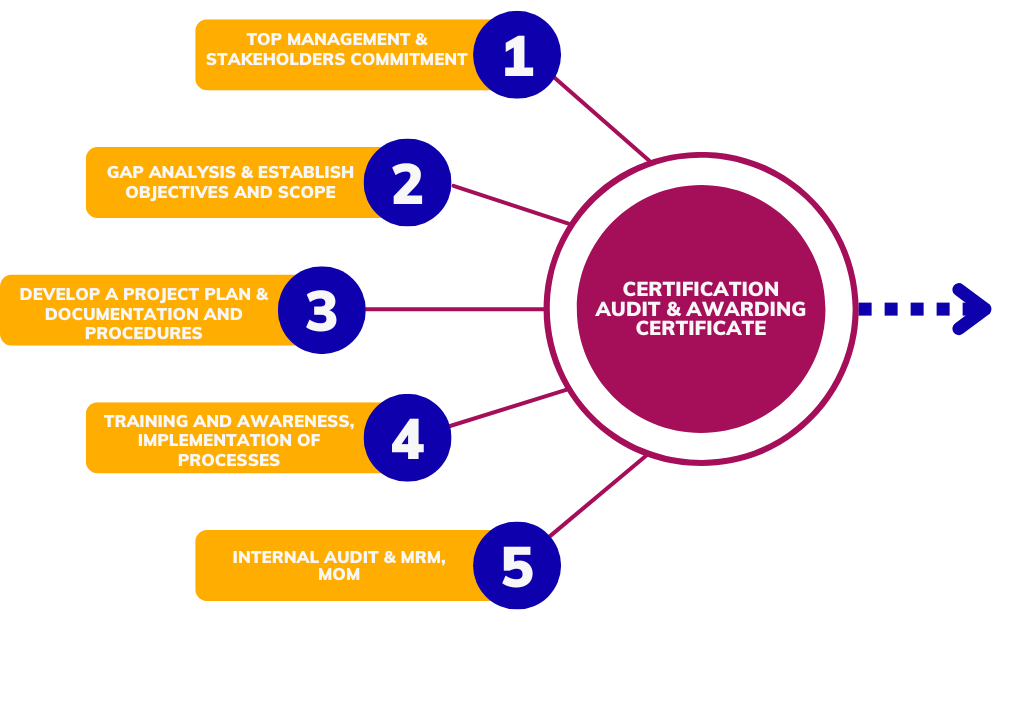
Approach and Methodology used to implement Management System Standard

Colorful Minimalist Linear Steps Circular Diagram 1 e1712599893569

Implementing an ISO standards involves a structured methodology to ensure that the organization effectively meets the requirements of the chosen standard and achieves certification. Sometimes defined methodology may vary depending on factors such as the size of the organization, its industry, and the complexity of the ISO standard being implemented, the following steps provide a basic framework

Ellipse 6 copy

OUR

Process

1, Determine the ISO Standard

2. Understand the Requirements

3. Training and Awareness

4. Implement the System

5. Internal Audit

6. Certification

partner_img

Benefits of having ISO Certification

Enhanced Credibility and Reputation

Legal and Regulatory Compliance

Enhanced Customer Satisfaction

Access to Global Markets

Environmental Sustainability

Information Security

Our Achievements and Success

Professional Experts
0 +
Years Experience
0 +
Projects
0 +
Satisfied Customers
0 %

Our Clients

WhatsApp Image 2023 05 12 at 8.24.31 PM e1684164170667
WhatsApp Image 2023 05 12 at 8.16.53 PM e1684163940587
WhatsApp Image 2023 05 12 at 8.22.55 PM
WhatsApp Image 2023 05 12 at 8.04.13 PM 3 e1684163886384
WhatsApp Image 2023-05-12 at 8.15.32 PM

OUR

SERVICES

ISO 9001 Certification
ISO 45001 Certification
ISO 14001 Certification
ISO 22000 Certification
ISO 13485 Certification
ISO 27001 Certification
ISO 20000-1 Certification
ISO 29001 Certification
HALAL for Yemen Organisations

HALAL Consulting and Readiness Services in Yemen

Build a practical Halal assurance system that helps Yemen organisations control ingredients, processing, segregation, cleanliness, traceability and religious-conformity evidence with clear ownership, current evidence and assessment readiness.

Build Halal Integrity from Sourcing through Distribution

Yemeni food, cosmetics, pharmaceutical, hospitality and distribution operations need controlled ingredients, segregation, cleanliness and traceability for Halal assurance. Yemeni food, cosmetics, pharmaceutical, hospitality and export operations need controlled ingredients, segregation, cleanliness and traceability for Halal assurance. Yemen food, cosmetics, pharmaceutical, hospitality and logistics operations need controlled ingredients, segregation, cleanliness and traceability for Halal assurance. Yemen food, cosmetics, pharmaceutical, hospitality and logistics operations need controlled ingredients, segregation, cleanliness and traceability for Halal assurance. Yemen food, cosmetics, pharmaceutical, hospitality and logistics operations need controlled ingredients, segregation, cleanliness and traceability for Halal assurance. Yemen food, cosmetics, pharmaceutical, hospitality and logistics operations need controlled ingredients, segregation, cleanliness and traceability for Halal assurance. Yemen food, cosmetics, pharmaceutical, catering and logistics operations need controlled ingredients, segregation, cleanliness and traceability for Halal assurance. Yemen food, cosmetics, pharmaceutical, hospitality and logistics operations need controlled ingredients, segregation, cleanliness and traceability for Halal assurance. Yemen food, cosmetics, pharmaceutical, hospitality and logistics operations need controlled ingredients, segregation, cleanliness and traceability for Halal assurance. Yemen businesses usually consider HALAL when growth, customer assurance or regulatory expectations expose gaps in approved ingredients and supplier and certificate checks.

The Halal assurance system provides a disciplined route to control ingredients, processing, segregation, cleanliness, traceability and religious-conformity evidence, while keeping responsibilities proportionate to the organisation's size, services and risk profile.

Qualitcert helps leaders translate the requirements into operating controls for segregation, cleaning and contamination control and traceability, supported by records that can be reviewed and improved.

Readiness is completed by testing authority-specific requirements, correcting weaknesses and preparing management and process owners for the Halal certification audit by the selected authority.

Yemen Operating Context

Halal Assurance for Yemen Food, Personal-Care and Supply Operations

Yemen organisations use HALAL to improve assurance where approved ingredients, supplier and certificate checks and segregation cross teams, suppliers or technical systems.

Ingredient sourcing and distribution chains make supplier approval, certificate checking, segregation, cleaning and product identification central to Halal integrity.

Customer reviews often reveal gaps between documented intentions and the way approved ingredients, segregation and traceability are performed across projects or sites.

A locally relevant programme connects these requirements to accountable owners, practical records and review routines for supplier and certificate checks, cleaning and contamination control and authority-specific requirements.

Operational and Assurance Value

Operational Benefits of HALAL in Yemen

The value comes from making approved ingredients, supplier and certificate checks and segregation easier to manage, measure and explain.

Clearer Approved Ingredients

Defines ownership, criteria and evidence for approved ingredients across the agreed scope.

Stronger Supplier And Certificate Checks

Connects supplier and certificate checks to practical controls rather than isolated policy statements.

More Reliable Segregation

Makes segregation easier to monitor, test and improve with current records.

Better Cleaning And Contamination Control

Supports consistent decisions about cleaning and contamination control during normal work and change.

Industry Applications

Where HALAL Applies in Yemen

The examples below show how the Halal assurance system changes with the operating model, risk profile and evidence needs of each sector.

01

Food Processing and Distribution

Control approved ingredients, segregation, cleaning, preparation and staff awareness.

02

Processed Food Manufacturing

Review formulations, additives, processing aids, cleaning and packaging.

03

Restaurants and Central Kitchens

Manage sourcing, storage, utensils, preparation, service and staff awareness.

04

Cosmetics and Personal Care

Evaluate ingredients, processing aids, manufacturing controls and product records.

05

Pharmaceutical Products

Review excipients, capsules, processing materials, cleaning and supplier evidence.

06

Warehousing and Logistics

Maintain segregation, identification, handling, transport and traceability.

Implementation Route

How HALAL Readiness Is Built

The sequence moves from scope and current-state review to operating evidence and preparation for the Halal certification audit by the selected authority.

01

Define Approved Ingredients

Confirm boundaries, responsibilities and criteria for approved ingredients.

02

Assess Supplier And Certificate Checks

Review current practices, risks and evidence relating to supplier and certificate checks.

03

Design Segregation

Create proportionate controls and records for segregation.

04

Implement Cleaning And Contamination Control

Assign owners, train relevant personnel and operate cleaning and contamination control.

05

Verify Traceability

Test the effectiveness and consistency of traceability.

06

Improve Authority-Specific Requirements

Close gaps and strengthen authority-specific requirements before the Halal certification audit by the selected authority.

Records and Control Evidence

Evidence Commonly Prepared for HALAL

The final evidence set depends on scope, risk, customer obligations and the selected Halal certification audit by the selected authority route.

Typical HALAL Records

  • Scope, applicability and responsibility statement
  • Approved Ingredients register or criteria
  • Supplier And Certificate Checks assessment records
  • Segregation procedure or control matrix
  • Cleaning And Contamination Control operating evidence
  • Traceability monitoring or test results
  • Authority-Specific Requirements review records
  • Competence, awareness and communication evidence
  • Internal review, findings and corrective-action log
  • Management approval and Halal certification audit by the selected authority readiness record
Records should be current, approved, traceable and maintained by the people who operate the controls.

Weak Points to Correct Early

These issues commonly weaken HALAL readiness or create avoidable questions during the Halal certification audit by the selected authority.

  • Defining approved ingredients without linking it to the real operating scope.
  • Assigning no accountable owner for supplier and certificate checks.
  • Documenting segregation without current operating evidence.
  • Leaving changes that affect cleaning and contamination control outside formal review.
  • Approaching the Halal certification audit by the selected authority before traceability and authority-specific requirements have been tested.
Early correction reduces document rework and gives process owners time to produce credible evidence.
Contextual Yemen Resources

Review HACCP certification guidance in Yemen for a verified Yemen resource connected to this programme.

Review sustainability, sector growth and ISO certification in Yemen for broader Yemen business and sector context.

Review a direct discussion about HALAL implementation in Yemen to confirm scope, evidence needs and the appropriate assessment route.

Frequently Asked Questions

HALAL Questions from Yemen Organisations

These answers focus on scope, implementation evidence and preparation for the Halal certification audit by the selected authority.

What business problem does HALAL address for Yemen organisations?

It provides a structured way to control ingredients, processing, segregation, cleanliness, traceability and religious-conformity evidence while creating clear ownership and reviewable evidence.

Which Yemen operations usually consider HALAL?

It is commonly relevant to Meat and Poultry Products, Processed Food Manufacturing, Restaurants and Central Kitchens and other organisations with comparable assurance needs.

How should the scope for HALAL be determined?

Scope should reflect the actual sites, services, products, systems, people and third parties needed for the Halal assurance system to achieve its intended outcome.

Why is approved ingredients important in HALAL readiness?

Approved ingredients establishes the boundaries and decision criteria needed to make later controls and evidence coherent.

What evidence supports supplier and certificate checks under HALAL?

Evidence normally includes approved criteria, assigned responsibilities, operating records, monitoring results and actions taken when requirements are not met.

How is segregation checked before the Halal certification audit by the selected authority?

Qualitcert reviews design, implementation and sampled evidence to confirm that segregation is applied consistently across the agreed scope.

Can HALAL be coordinated with ISO 22000?

Yes. Shared governance, risk, competence, document control, audit and improvement activities can often be aligned without losing service-specific requirements.

What common gap delays HALAL readiness?

A frequent gap is having policies without current evidence that owners understand and operate the controls related to cleaning and contamination control.

What should management review before the Halal certification audit by the selected authority for HALAL?

Management should review scope, performance, open risks, findings, resources, changes and whether traceability and authority-specific requirements are effective.

How does Qualitcert support HALAL implementation in Yemen?

Qualitcert provides gap review, implementation planning, document and control development, training, internal review and readiness support without acting as the independent assessor.

Discuss HALAL Readiness

Build a Practical HALAL Programme in Yemen

Share your scope, current controls and target Halal certification audit by the selected authority. Qualitcert can review gaps and define a proportionate implementation plan.

Plan HALAL Readiness →
Scroll to Top