









Global ISO Certification Consultant Services – Qualitcert

QualitCert Get a Quote

ISO Certifications

DR Congo

Consulting &

ISO Certifications

-ISO Certification-

HACCP Certification Consulting Services in DR Congo

QUALIT

CERT

CONSULTING AND ISO CERTIFICATIONS

Qualitcert provides expert HACCP (Hazard Analysis Critical Control Point) certification services in the Democratic Republic of Congo (DR Congo), aimed at helping organizations implement robust food safety management systems. The consulting process begins with a thorough hazard analysis to identify potential food safety risks and establish critical control points to mitigate these risks effectively. Qualitcert’s team offers tailored training sessions to educate staff on HACCP principles, ensuring that they understand and can apply the seven HACCP principles in their operations. They assist in developing and documenting comprehensive food safety plans, including monitoring procedures, corrective actions, and verification processes. Qualitcert provides continuous support throughout the implementation process to ensure compliance with HACCP standards. By guiding organizations through the certification process, Qualitcert enhances food safety practices, helps meet regulatory requirements, and boosts consumer confidence in food products. This methodical and supportive approach ensures that organizations in DR Congo achieve and maintain HACCP certification, leading to safer food production and handling practices.

Get In Touch

Test
Consultants Consultants
afd9a249 perf wp theme group 8796 Consultants Consultants

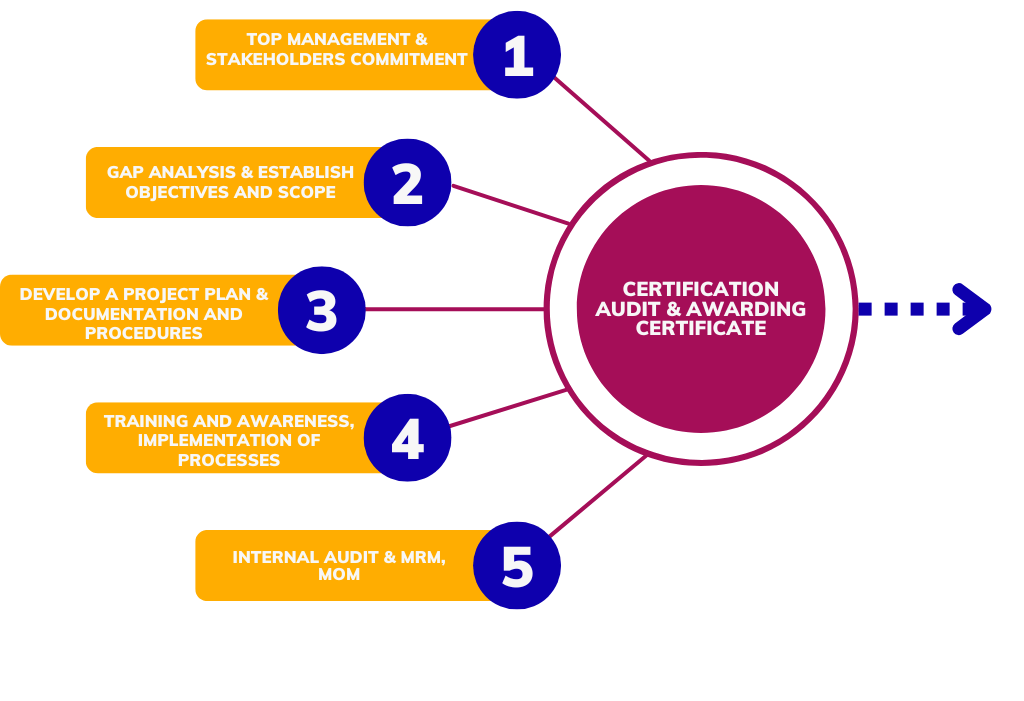
Approach and Methodology used to implement Management System Standard

Colorful Minimalist Linear Steps Circular Diagram 1 e1712599893569 Consultants Consultants

Implementing an HACCP  standards involves a structured methodology to ensure that the organization effectively meets the requirements of the chosen standard and achieves certification. Sometimes defined methodology may vary depending on factors such as the size of the organization, its industry, and the complexity of the HACCP standard being implemented, the following steps provide a basic framework

Ellipse 6 copy Consultants Consultants

OUR

Process

1, Determine the ISO Standard

2. Understand the Requirements

3. Training and Awareness

4. Implement the System

5. Internal Audit

6. Certification

partner_img Consultants Consultants

Benefits of having ISO Certification

Enhanced Credibility and Reputation

Legal and Regulatory Compliance

Enhanced Customer Satisfaction

Access to Global Markets

Environmental Sustainability

Information Security

Our Achievements and Success

Professional Experts
0 +
Years Experience
0 +
Projects
0 +
Satisfied Customers
0 %

Our Clients

WhatsApp Image 2023 05 12 at 8.24.31 PM e1684164170667
WhatsApp Image 2023 05 12 at 8.16.53 PM e1684163940587
WhatsApp Image 2023 05 12 at 8.22.55 PM
WhatsApp Image 2023 05 12 at 8.04.13 PM 3 e1684163886384
WhatsApp Image 2023-05-12 at 8.15.32 PM

OUR

SERVICES

ISO 9001 Certification
ISO 45001 Certification
ISO 14001 Certification
ISO 22000 Certification
ISO 13485 Certification
ISO 27001 Certification
ISO 20000-1 Certification
ISO 29001 Certification
Operational Assurance

Building a credible HACCP management approach in DR Congo

For the HACCP scope in DR Congo, HACCP preparation should create a system that people can operate and an auditor can trace. The focus here is focus scarce food-safety resources on the points where loss of control can create a real consumer hazard.

The operating evidence behind HACCP readiness

Certification preparation for HACCP in DR Congo is most useful when it improves control of work before it improves the appearance of documents. This page focuses on how to focus scarce food-safety resources on the points where loss of control can create a real consumer hazard.

The organizations most likely to benefit include food processing, institutional catering, mining-camp kitchens, beverage operations, distribution and hospitality. In the DR Congo implementation context, their management systems often span multiple handoffs, and small inconsistencies can become recurring audit findings or customer problems.

A focused review looks closely at temperature control, water quality, cross-contamination, sanitation reliability and inconsistent receiving checks. Within DR Congo's defined certification boundary, instead of creating paperwork around every activity, the aim is to identify where evidence is necessary to demonstrate reliable control.

Qualitcert can help convert current practice into an auditable system built around product descriptions, process flows, hazard decisions, monitoring logs and deviation records, while keeping responsibilities practical for the people who must maintain the system after certification.

Local Operating Context

The business context behind HACCP in DR Congo

A useful system reflects real process boundaries, external dependencies and the risks created by food processing, institutional catering, mining-camp kitchens, beverage operations, distribution and hospitality.

The operating context in DR Congo shapes how HACCP should be implemented. Organizations working across food processing, institutional catering, mining-camp kitchens, beverage operations, distribution and hospitality may share the same standard, but their risks, evidence and process boundaries are not interchangeable.

For teams maintaining HACCP in DR Congo, A sensible implementation starts by separating what already works from what is only informal. Particular attention should be given to temperature control, water quality, cross-contamination, sanitation reliability and inconsistent receiving checks, because these areas can affect customers, regulators, workers or delivery performance depending on the standard.

Readiness improves when the management team can explain why controls exist and can show recent records such as product descriptions, process flows, hazard decisions, monitoring logs and deviation records. In practical HACCP use across DR Congo, that makes the system easier to audit and easier to maintain after certification.

What Changes in Practice

Operational gains from a well-built HACCP system

For the HACCP scope in DR Congo, the strongest outcomes are visible in decisions, handovers, monitoring and corrective action—not in certificate wording alone.

Hazard focus

Food-safety effort is directed to significant biological, chemical and physical hazards rather than generic inspection, as part of the HACCP system used in DR Congo. A useful test is whether this control helps food processing handle temperature control without creating a parallel paperwork process.

Defined response

Critical limits and deviation actions tell operators what to do when control is lost, for teams maintaining the HACCP controls in DR Congo. A useful test is whether this control helps institutional catering handle water quality without creating a parallel paperwork process.

Verifiable records

Monitoring and verification evidence shows whether the plan works during normal production, inside the auditable HACCP boundary in DR Congo. A useful test is whether this control helps mining-camp kitchens handle cross-contamination without creating a parallel paperwork process.

Stronger handovers

Responsibilities between receiving, production, storage, sanitation and dispatch become clearer, for the operating conditions included in the DR Congo scope. A useful test is whether this control helps beverage operations handle sanitation reliability without creating a parallel paperwork process.

Sector Applications

Examples of HACCP in different operating settings

In the DR Congo implementation context, the same standard can demand different evidence depending on process risk, product or service type, workforce and customer expectations.

01

Food processing

Analyze each processing step and define controls where hazards can be introduced, survive or increase, for teams maintaining the HACCP controls in DR Congo. In DR Congo, the implementation can be tailored around water quality, with records scaled to the complexity of the operation.

02

Catering

Control receiving, cooking, cooling, holding and service conditions in high-turnover food operations, inside the auditable HACCP boundary in DR Congo. In DR Congo, the implementation can be tailored around cross-contamination, with records scaled to the complexity of the operation.

03

Cold chain

Protect temperature-sensitive products through storage, loading, transport and exception handling, for the operating conditions included in the DR Congo scope. In DR Congo, the implementation can be tailored around sanitation reliability, with records scaled to the complexity of the operation.

04

Beverage operations

Address water quality, sanitation, foreign material and process-control hazards, within the defined HACCP scope in DR Congo. In DR Congo, the implementation can be tailored around inconsistent receiving checks, with records scaled to the complexity of the operation.

05

Hospitality kitchens

Convert recipe and kitchen-flow knowledge into measurable food-safety controls, for the DR Congo operation covered by this HACCP work. In DR Congo, the implementation can be tailored around temperature control, with records scaled to the complexity of the operation.

06

Packing and distribution

Assess contamination, labeling, storage and handling risks around finished foods, as part of the HACCP system used in DR Congo. In DR Congo, the implementation can be tailored around water quality, with records scaled to the complexity of the operation.

Readiness Sequence

How the HACCP implementation work is sequenced

Within DR Congo's defined certification boundary, each stage should leave the organization with a stronger operating control, not just another document.

01

Describe products and use

Document ingredients, packaging, storage conditions, shelf life and intended consumers, as part of the HACCP system used in DR Congo. The checkpoint should be tested using recent evidence from mining-camp kitchens rather than relying on a newly written procedure.

02

Verify the process flow

Walk the operation and confirm the flow diagram reflects actual receiving, processing and dispatch steps, for teams maintaining the HACCP controls in DR Congo. In this HACCP implementation for DR Congo, the checkpoint should be tested using recent evidence from beverage operations rather than relying on a newly written procedure.

03

Analyze hazards

Evaluate reasonably expected hazards and identify the controls needed for significant risks, inside the auditable HACCP boundary in DR Congo. The checkpoint should be tested using recent evidence from distribution rather than relying on a newly written procedure.

04

Set critical control rules

Define CCPs where applicable, critical limits, monitoring responsibility and immediate deviation actions, for the operating conditions included in the DR Congo scope. In this HACCP implementation for DR Congo, the checkpoint should be tested using recent evidence from hospitality rather than relying on a newly written procedure.

05

Verify the plan

Use record review, calibration, observation, testing where appropriate and validation evidence, within the defined HACCP scope in DR Congo. In this HACCP implementation for DR Congo, the checkpoint should be tested using recent evidence from food processing rather than relying on a newly written procedure.

06

Keep the system current

Reassess the HACCP plan after product, process, equipment, ingredient or regulatory changes, for the DR Congo operation covered by this HACCP work. The checkpoint should be tested using recent evidence from institutional catering rather than relying on a newly written procedure.

Records and Controls

Evidence to organize before a HACCP assessment

For teams maintaining HACCP in DR Congo, documents matter when they support decisions and prove implementation; uncontrolled templates add volume without strengthening assurance.

Records worth organizing early

  • Product descriptions
  • Process flow diagrams
  • Hazard analysis worksheet
  • CCP decision records
  • Critical limits
  • Monitoring forms
  • Corrective action records
  • Verification schedule
  • Calibration evidence
  • HACCP review records
Evidence should be current, attributable and consistent with the defined HACCP scope in DR Congo. In this HACCP implementation for DR Congo, where several records support the same decision, keep ownership and revision status clear so an auditor can follow the trail without reconstruction.

Implementation traps to remove

In practical HACCP use across DR Congo, these issues commonly reduce confidence in implementation because they separate written requirements from the way work is actually controlled.

  • Choosing CCPs before completing a structured hazard analysis, for the operating conditions included in the DR Congo scope.
  • Setting limits that are not measurable during normal operations, within the defined HACCP scope in DR Congo.
  • Recording a deviation without documenting product disposition and cause, for the DR Congo operation covered by this HACCP work.
  • Relying on end-product testing as the primary control method, as part of the HACCP system used in DR Congo.
  • Leaving process changes outside the HACCP review process, for teams maintaining the HACCP controls in DR Congo.
For the HACCP scope in DR Congo, closing a systemic cause is more valuable than polishing wording immediately before the HACCP audit. Prioritize gaps that affect temperature control, water quality, cross-contamination, sanitation reliability and inconsistent receiving checks before spending time on cosmetic document formatting.
Related Requirements

Within DR Congo's defined certification boundary, where the same teams own overlapping controls, reviewISO 22000. For teams maintaining HACCP in DR Congo, keep the scopes distinct while reusing genuinely shared evidence such as competence, audit, supplier or management-review records where appropriate.

In practical HACCP use across DR Congo, if the organization is coordinating adjacent assurance work, reviewFSSC 22000. For the HACCP scope in DR Congo, keep the scopes distinct while reusing genuinely shared evidence such as competence, audit, supplier or management-review records where appropriate.

In the DR Congo implementation context, for a connected requirement with shared records, reviewISO 9001. Within DR Congo's defined certification boundary, keep the scopes distinct while reusing genuinely shared evidence such as competence, audit, supplier or management-review records where appropriate.

Common Questions

Practical questions before starting HACCP certification

For teams maintaining HACCP in DR Congo, these answers focus on implementation choices, evidence and audit readiness rather than generic definitions.

What is the first step in a HACCP study for an organization in DR Congo?

In practical HACCP use across DR Congo, A multidisciplinary team should define products, intended use and process flow before evaluating hazards at each step. For DR Congo, the practical check is whether the answer is supported by current records from food processing.

Does every hazard become a CCP?

No. For the HACCP scope in DR Congo, hazards are evaluated for significance, and control measures are selected using the organization’s decision method; only appropriate points are classified as CCPs. The records should reflect the actual scope and operating arrangements used in DR Congo. For DR Congo, the practical check is whether the answer is supported by current records from institutional catering.

What makes a critical limit acceptable?

In the DR Congo implementation context, A critical limit should distinguish acceptable from unacceptable control at a CCP and should have a technical or scientific basis. For DR Congo, the practical check is whether the answer is supported by current records from mining-camp kitchens.

When preparing HACCP in DR Congo, what should happen when monitoring shows a deviation?

For teams maintaining HACCP in DR Congo, the operation should regain control, identify affected product, decide disposition, record what happened and address the reason for the deviation. For DR Congo, the practical check is whether the answer is supported by current records from beverage operations.

How are HACCP plans verified before certification work in DR Congo?

In practical HACCP use across DR Congo, verification can include record review, observation, calibration, internal checks, testing where appropriate and confirmation that planned activities were completed. For DR Congo, the practical check is whether the answer is supported by current records from distribution.

Is cleaning part of HACCP?

For the HACCP scope in DR Congo, sanitation is usually managed through prerequisite programs, but its effectiveness can be essential to the hazard analysis and the control of specific hazards. The records should reflect the actual scope and operating arrangements used in DR Congo. For DR Congo, the practical check is whether the answer is supported by current records from hospitality.

When preparing HACCP in DR Congo, when should the HACCP plan be reviewed?

Within DR Congo's defined certification boundary, review is needed at planned intervals and when products, ingredients, processes, equipment, suppliers or relevant requirements change. For DR Congo, the practical check is whether the answer is supported by current records from food processing.

For organizations in DR Congo, can a HACCP plan cover several products?

In practical HACCP use across DR Congo, A grouped plan may be appropriate when products and processes are sufficiently similar, but the hazard analysis must still address meaningful differences. For DR Congo, the practical check is whether the answer is supported by current records from institutional catering.

When preparing HACCP in DR Congo, what records are commonly requested during an audit?

In the DR Congo implementation context, auditors commonly sample monitoring, corrective action, verification, calibration, sanitation and training evidence relevant to the HACCP plan. The records should reflect the actual scope and operating arrangements used in DR Congo. For DR Congo, the practical check is whether the answer is supported by current records from mining-camp kitchens.

How can Qualitcert support HACCP readiness in DR Congo?

Within DR Congo's defined certification boundary, qualitcert can facilitate flow verification, hazard analysis, control-plan development, record design and readiness checks. For DR Congo, the practical check is whether the answer is supported by current records from beverage operations.

Plan the Next Step

Review the evidence before your HACCP assessment

For teams maintaining HACCP in DR Congo, if your team already has policies and records, a focused review can separate usable evidence from gaps that may create findings. Qualitcert can help plan the next HACCP actions.

Discuss the Certification Scope →
Scroll to Top