








Global ISO Certification Consultant Services – Qualitcert

QualitCert Get a Quote

ISO Certifications

ETHIOPIA

Consulting &

ISO Certifications

-ISO Certification-

VAPT Certification Consulting Company in Ethiopia

QUALIT

CERT

CONSULTING AND ISO CERTIFICATIONS

Qualitcert is a major consulting company in Ethiopia focusing in Vulnerability Assessment and Penetration Testing (VAPT) certification services. With an emphasis on increasing cybersecurity measures, Qualitcert offers expert advise and bespoke solutions to help firms detect vulnerabilities inside their systems and networks. In-depth evaluations, practical testing scenarios, and extensive reporting are all part of their comprehensive VAPT services, which guarantee that clients are aware of their security posture and get useful insights for enhancement. Businesses may bolster their defenses against cyber attacks, adhere to industry standards, and cultivate customer trust through strong cybersecurity practices by collaborating with Qualitcert.

Get In Touch

Test
Consultants Consultants
afd9a249 perf wp theme group 8796 Consultants Consultants

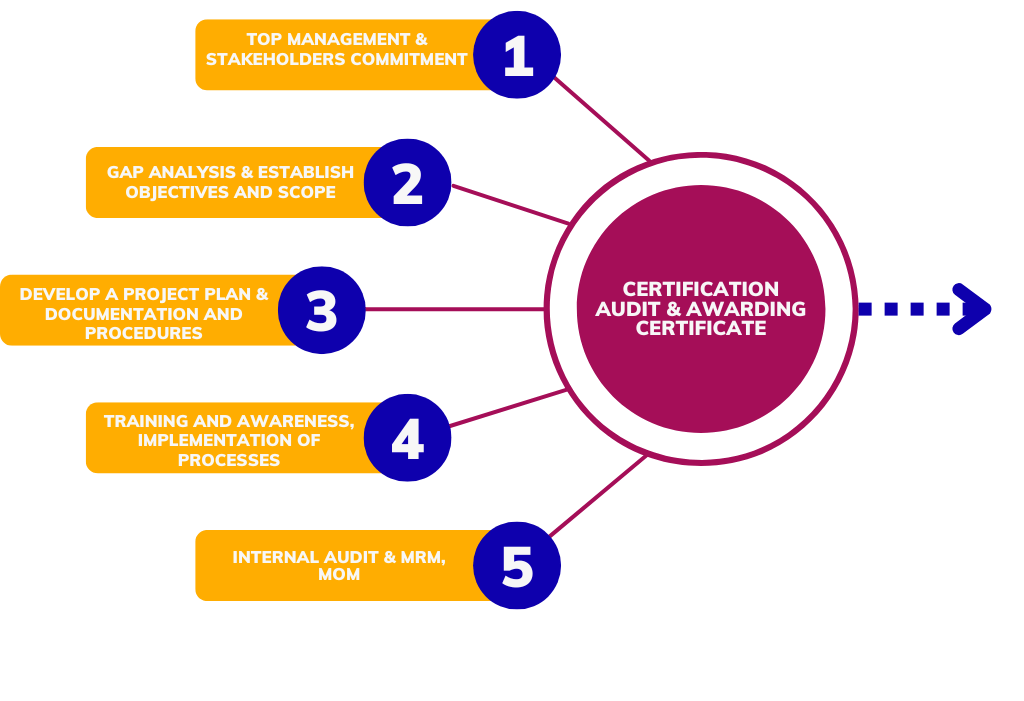
Approach and Methodology used to implement Management System Standard

Colorful Minimalist Linear Steps Circular Diagram 1 e1712599893569 Consultants Consultants

Implementing an ISO  standards involves a structured methodology to ensure that the organization effectively meets the requirements of the chosen standard and achieves certification. Sometimes defined methodology may vary depending on factors such as the size of the organization, its industry, and the complexity of the ISO standard being implemented, the following steps provide a basic framework

Ellipse 6 copy Consultants Consultants

OUR

Process

1, Determine the ISO Standard

2. Understand the Requirements

3. Training and Awareness

4. Implement the System

5. Internal Audit

6. Certification

partner_img Consultants Consultants

Benefits of having ISO Certification

Enhanced Credibility and Reputation

Legal and Regulatory Compliance

Enhanced Customer Satisfaction

Access to Global Markets

Environmental Sustainability

Information Security

Our Achievements and Success

Professional Experts
0 +
Years Experience
0 +
Projects
0 +
Satisfied Customers
0 %

Our Clients

WhatsApp Image 2023 05 12 at 8.24.31 PM e1684164170667
WhatsApp Image 2023 05 12 at 8.16.53 PM e1684163940587
WhatsApp Image 2023 05 12 at 8.22.55 PM
WhatsApp Image 2023 05 12 at 8.04.13 PM 3 e1684163886384
WhatsApp Image 2023-05-12 at 8.15.32 PM

OUR

SERVICES

ISO 9001 Certification
ISO 45001 Certification
ISO 14001 Certification
ISO 22000 Certification
ISO 13485 Certification
ISO 27001 Certification
ISO 20000-1 Certification
ISO 29001 Certification
VAPT Readiness for Ethiopia

VAPT Certification and Consulting Services in Ethiopia for Vulnerability Assessment and Penetration Testing

VAPT combines vulnerability assessment with controlled penetration testing to identify weaknesses, validate exploitability and provide practical remediation priorities.

Test technical exposure before attackers do

VAPT addresses technical security testing through a defined framework of responsibilities, risk-based controls, evidence and review. A useful implementation begins with the organisation’s actual activities and commitments rather than a generic document set.

For Ethiopian organisations running internet-facing applications, mobile services, networks or cloud platforms, VAPT should be scoped around assets, business risk, testing safety and evidence-based retesting—not treated as an automated scan.

Implementation in Ethiopia should define scope, accountable owners, operational criteria, competence needs and records that demonstrate controls are working. Management then reviews performance, nonconformities and improvement priorities.

Qualitcert supports gap analysis, system design, documentation, implementation guidance, internal audit and readiness preparation so the Vulnerability Assessment and Penetration Testing can be used in daily work and assessed with confidence.

Ethiopia Business Context

VAPT priorities for organisations operating in Ethiopia

Different Ethiopian sectors face different technical security testing challenges, so scope and controls should reflect actual services, sites, technology, products and interested parties.

The first practical step is to understand where the organisation creates or inherits technical security testing risk. Boundaries, outsourced activities, legal or customer commitments and operational dependencies should be made clear.

A strong Vulnerability Assessment and Penetration Testing connects policy with measurable objectives, day-to-day controls, retained records and escalation. This prevents the system from becoming disconnected from operational decisions.

Internal audit and management review provide the evidence needed to confirm implementation, correct weaknesses and maintain readiness as the organisation changes.

Business Value

Benefits of VAPT for Ethiopian Organisations

The value of VAPT comes from clearer decisions, controlled evidence and improvements that are visible in day-to-day operations.

Clearer risk ownership

Responsibilities for technical security testing decisions are assigned and understood.

Stronger compliance evidence

Policies, procedures and records are organised for customer or assessor review.

More consistent operations

Defined criteria reduce dependence on informal individual practice.

Continual improvement

Findings, incidents and performance data lead to corrective action.

Industry Applications

Where VAPT Applies in Ethiopia

These examples show how the Vulnerability Assessment and Penetration Testing can be adapted to different operating environments without losing its core purpose.

01

Banks and fintech

Authentication, transaction flows, APIs and payment infrastructure.

02

Web and mobile platforms

Web, mobile and API attack surfaces with release-cycle retesting.

03

Telecommunications

External exposure, segmentation, device management and signalling risks.

04

Government systems

Public portals, remote access and sensitive internal services.

05

Healthcare applications

Patient portals, APIs, connected devices and data repositories.

06

E-commerce services

Account takeover, payment abuse and application-layer weaknesses.

Implementation Journey

A Practical VAPT Readiness Roadmap

The sequence should move from scope and risk to implemented controls, objective evidence, internal review and external assessment readiness.

01

Confirm scope

Define sites, services, interfaces and applicable commitments.

02

Complete gap analysis

Compare current practice with the relevant requirements.

03

Assess risk

Identify, evaluate and prioritise material risks and controls.

04

Implement controls

Issue procedures, assign owners, train personnel and retain evidence.

05

Audit the system

Test implementation, record findings and complete corrective action.

06

Review readiness

Hold management review and prepare evidence for assessment or reporting.

Documentation and Evidence

Records Commonly Needed for VAPT

The exact document set depends on scope and maturity, but records should be current, controlled, used by responsible people and available for audit sampling.

Typical Policies, Procedures and Records

  • Rules of engagement
  • Asset inventory
  • Testing scope
  • Authorization records
  • Scan evidence
  • Manual test notes
  • Exploit validation
  • Risk ratings
  • Remediation plan
  • Retest report
Documentation should support actual controls rather than duplicate work or create evidence only for the audit.

Common Implementation Mistakes

These weaknesses can reduce the credibility of a VAPT system and create avoidable findings during readiness review.

  • Scanning without validating false positives.
  • Testing production systems without agreed safeguards.
  • Reporting vulnerabilities without business context.
  • Failing to protect credentials and test data.
  • Skipping remediation verification.
Corrective action should address causes, responsibilities, deadlines and effectiveness—not only the immediate symptom.
Related Ethiopia Services

Where requirements overlap, review ISO/IEC 27001 services in Ethiopia and align shared responsibilities, risk records, audits and improvement actions without duplicating the management system.

Where requirements overlap, review SOC 2 services in Ethiopia and align shared responsibilities, risk records, audits and improvement actions without duplicating the management system.

Where requirements overlap, review ISO 9001 services in Ethiopia and align shared responsibilities, risk records, audits and improvement actions without duplicating the management system.

VAPT FAQs

Questions about VAPT in Ethiopia

These answers explain scope, documentation, implementation, audit preparation and practical business use.

What is VAPT?

VAPT provides a structured approach to technical security testing for a defined organisational or service scope.

Who can use VAPT in Ethiopia?

Organisations in relevant sectors can use it when they need stronger technical security testing, customer assurance or independent assessment.

What is included in a gap analysis for VAPT?

A gap analysis compares existing practices and evidence with applicable requirements and identifies priorities, owners and next actions.

Which documents are normally prepared for VAPT?

Typical documents include policies, scope records, risk assessments, procedures, operational evidence, audit findings and management review records.

How should risk be assessed for VAPT?

The method should define criteria, responsible persons, treatment decisions and periodic review so priorities are consistent and explainable.

Why is internal audit required for VAPT?

Internal audit checks whether planned controls are implemented, effective and supported by reliable evidence.

What does management review cover for VAPT?

Management evaluates performance, changes, risks, resources, findings, corrective actions and improvement opportunities.

How long does implementation take for VAPT?

Timing depends on scope, complexity, current maturity, available evidence and how quickly actions are implemented.

Can the system integrate with other standards for VAPT?

Yes. Shared processes can cover document control, competence, risk, internal audit, corrective action and management review.

How does Qualitcert support readiness for VAPT?

Qualitcert helps define the roadmap, prepare fit-for-purpose documents, guide implementation, perform internal review and organise assessment evidence.

Speak with Qualitcert

Plan a Controlled VAPT Engagement for Your Ethiopia Systems

Share your scope, current controls and assurance priorities. Qualitcert can help plan a practical VAPT readiness programme for operations in Ethiopia.

Request an Ethiopia Consultation →
Scroll to Top