








Global ISO Certification Consultant Services – Qualitcert

QualitCert Get a Quote

ISO Certifications

italy

Consulting &

ISO Certifications

-ISO Certification-

ISO 13485 Certification Consulting Services in Italy

QUALIT

CERT

CONSULTING AND ISO CERTIFICATIONS

Qualitcert offers ISO 13485 certification services in Italy, with an emphasis on assisting medical device manufacturers in setting up and maintaining an appropriate quality management system. Our knowledgeable experts walk you through every step of the process, from comprehending the particulars of ISO 13485 to putting in place strong quality controls that adhere to global norms. In order to improve product quality and safety, we offer specialized help to make sure your activities comply with regulatory standards. You may access extensive industry knowledge and best practices by working with Qualitcert, which makes it possible for the certification process to go smoothly. Obtaining ISO 13485 certification enhances your standing in the cutthroat Italian and international medical device industry while also proving your dedication to quality and patient safety.

Please Reach Us Today

Test
Consultants Consultants
afd9a249 perf wp theme group 8796 Consultants Consultants

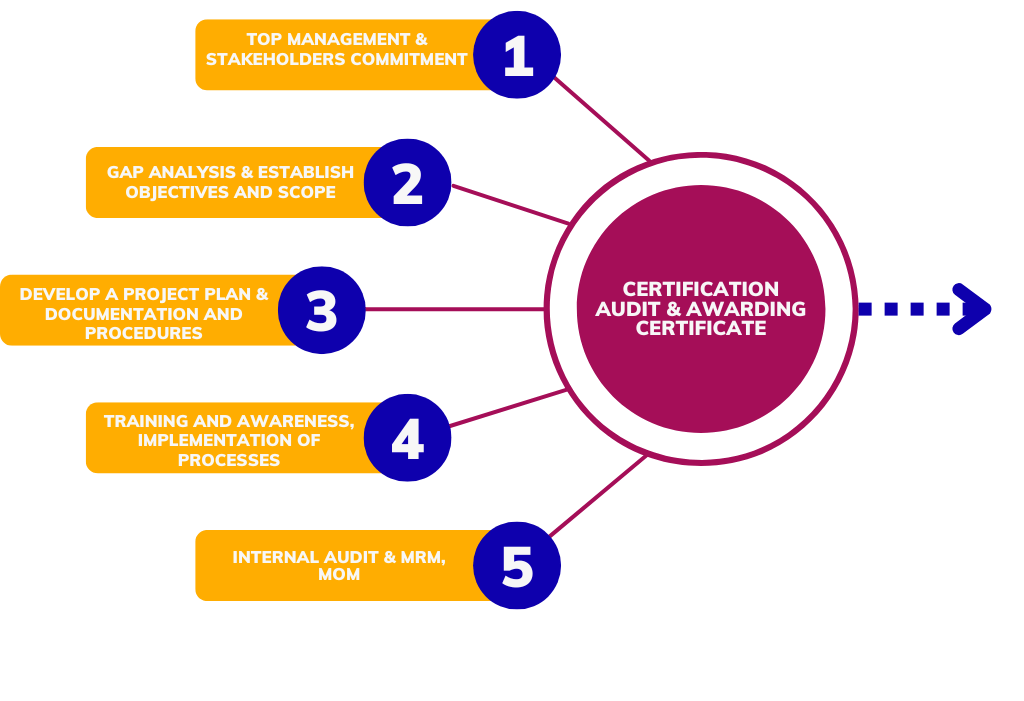
Approach and Methodology used to implement Management System Standard

Colorful Minimalist Linear Steps Circular Diagram 1 e1712599893569 Consultants Consultants

Implementing an ISO standards involves a structured methodology to ensure that the organization effectively meets the requirements of the chosen standard and achieves certification. Sometimes defined methodology may vary depending on factors such as the size of the organization, its industry, and the complexity of the ISO standard being implemented, the following steps provide a basic framework

Ellipse 6 copy Consultants Consultants

OUR

Process

1, Determine the ISO Standard

2. Understand the Requirements

3. Training and Awareness

4. Implement the System

5. Internal Audit

6. Certification

partner_img Consultants Consultants

Benefits of having ISO Certification

Enhanced Credibility and Reputation

Legal and Regulatory Compliance

Enhanced Customer Satisfaction

Access to Global Markets

Environmental Sustainability

Information Security

Our Achievements and Success

Professional Experts
0 +
Years Experience
0 +
Projects
0 +
Satisfied Customers
0 %

Our Clients

WhatsApp Image 2023 05 12 at 8.24.31 PM e1684164170667
WhatsApp Image 2023 05 12 at 8.16.53 PM e1684163940587
WhatsApp Image 2023 05 12 at 8.22.55 PM
WhatsApp Image 2023 05 12 at 8.04.13 PM 3 e1684163886384
WhatsApp Image 2023-05-12 at 8.15.32 PM

OUR

SERVICES

ISO 9001 Certification
ISO 45001 Certification
ISO 14001 Certification
ISO 22000 Certification
ISO 13485 Certification
ISO 27001 Certification
ISO 20000-1 Certification
ISO 29001 Certification
Medical Device Quality Systems in Italy

ISO 13485 Consulting in Italy for Controlled Medical Device Lifecycle Processes

Medical device organisations in Italy need a quality system that can trace design, supplier, production and post-market decisions back to controlled requirements and objective evidence.

Build the QMS around device risk and regulatory responsibility

ISO 13485 is not a general quality template with medical terminology added. Its value comes from applying documented controls to the device lifecycle: product requirements, design and development where applicable, purchasing, production, cleanliness or contamination control, traceability, release, complaint handling and corrective action.

For manufacturers, contract manufacturers, component suppliers and other medical-device organisations in Italy, the first implementation question is scope. The QMS needs to reflect the organisation's actual role, the devices or services covered and the regulatory responsibilities that follow from those activities.

Supplier control deserves particular attention because a device may depend on critical materials, software, sterilisation, calibration, testing or outsourced manufacturing. Approval criteria, quality agreements, change notification and performance monitoring should therefore be aligned with the risk created by the supplied product or service.

Qualitcert helps teams translate those responsibilities into controlled processes, usable records and an audit trail that connects requirements, risk, verification, release and post-market feedback.

Italy Medical Device Context

Quality-system control across device design, supply and post-market activities

Medical device work often crosses organisational boundaries. A robust QMS keeps those interfaces controlled even when design, testing, manufacturing or specialist processes are outsourced.

Design-oriented organisations need a clear chain from user and product requirements to design outputs, reviews, verification, validation and transfer. Design changes should be assessed for their effect on risk, existing verification and the device records already released.

Production and supplier-facing organisations need equally strong configuration control. Drawings, specifications, work instructions, inspection criteria and acceptance records must identify the approved version so a change made by one function does not create an uncontrolled difference on the shop floor.

Post-market information should feed the system rather than sit in a separate complaint database. Complaints, service data, nonconforming product, supplier issues and corrective actions can provide evidence for risk review and for deciding whether broader action is needed.

Medical QMS Value

What stronger ISO 13485 controls can deliver

A well-structured QMS makes regulated decisions easier to trace and reduces reliance on individual memory when products, suppliers or technical files change.

More disciplined design changes

Teams can evaluate the effect of a design change on requirements, risk, verification, validation, documentation and released product before approval.

Risk-based supplier oversight

Critical suppliers and outsourced processes can receive controls proportionate to their impact on device conformity and patient or user safety.

Cleaner device and batch traceability

Production, inspection, release and distribution records can be connected more reliably when an investigation or complaint requires evidence.

Stronger CAPA decisions

Nonconformities, complaints, audit findings and trend data can be assessed together so corrective action addresses systemic causes rather than isolated symptoms.

Medical Device Operations

ISO 13485 applications for different organisations in Italy

The standard applies differently depending on the organisation's role in the device lifecycle. These examples show where the control emphasis changes.

01

Device manufacturers

Design, purchasing, production, release, identification, traceability and post-market processes can be governed through one controlled QMS.

02

Diagnostic and laboratory-device businesses

Reagent or instrument requirements, supplier controls, verification, labelling, software and complaint information can be traced through approved records.

03

Medical software organisations

Software lifecycle records, configuration, verification, validation, problem resolution and change control can be connected to device and quality-system requirements.

04

Contract manufacturers

Customer specifications, process validation, equipment control, acceptance criteria, change notification and traceability can be managed around contractual responsibilities.

05

Component and specialist suppliers

Material specifications, cleanliness, special processes, inspection, supplier changes and nonconformity control can be aligned with the risk of the supplied component.

06

Distribution and service activities

Product identification, storage, installation or servicing records, complaint escalation and traceability can be controlled according to the organisation's role.

QMS Implementation Path

Developing ISO 13485 around the medical device lifecycle

Implementation should follow the organisation's regulatory role and product processes, then connect those activities to document, risk and record controls.

01

Define role, scope and device families

Confirm the products, services, sites and responsibilities covered by the QMS so controls are built around the correct regulatory and operational boundary.

02

Map lifecycle processes

Trace requirements through design, purchasing, production, inspection, release, distribution, service and feedback to identify where documented controls and records are needed.

03

Strengthen risk-linked controls

Connect design, supplier, production and change decisions to the organisation's risk-management approach rather than treating risk as a separate technical file.

04

Control suppliers and special processes

Set qualification, monitoring, change and validation expectations for external providers and processes whose output cannot be fully confirmed by later inspection.

05

Test nonconformity and CAPA flow

Follow real complaints, rejects, supplier issues or audit findings to confirm investigation, escalation, corrective action and effectiveness review work together.

06

Prepare evidence for assessment

Use internal audits and management review to test process effectiveness, record completeness and staff understanding before external certification activity.

Medical Device QMS Evidence

Records that support traceability and controlled decision-making

The exact record set depends on the organisation's role and products, but evidence should allow a reviewer to reconstruct how requirements were approved and how conformity was demonstrated.

Typical ISO 13485 Records

  • QMS scope and quality manual
  • Device or product family matrix
  • Design and development records
  • Risk-management interfaces
  • Approved supplier records
  • Production and process controls
  • Validation records
  • Inspection and release evidence
  • Complaint and vigilance interfaces
  • CAPA and management-review records
Controlled documents should identify current approved requirements, while retained records should provide objective evidence of what was actually done for the relevant device, batch, lot or change.

Medical QMS Weaknesses to Avoid

Gaps often arise where technical, quality and regulatory responsibilities meet. These issues can weaken traceability even when individual procedures appear complete.

  • Treating supplier approval as a purchasing form without risk-based criteria for critical materials, services or outsourced processes.
  • Making design or manufacturing changes without evaluating their impact on risk controls, verification, validation and existing documentation.
  • Using work instructions or specifications whose revision status is unclear at the point of production or inspection.
  • Closing complaints or nonconformities without deciding whether trend, recurrence or systemic cause warrants corrective action.
  • Running CAPA as a separate database exercise without verifying that the action changed the affected process and did not create unintended consequences.
A strong readiness review traces one device change, one supplier issue and one complaint end to end; disconnected records become visible quickly when those cases are sampled.
Related Italy Services

For products that also require European conformity work, review CE Mark certification consulting services in Italy to coordinate product evidence with the controlled QMS records that support it.

Organisations that want to align broader customer and process-quality disciplines can also see ISO 9001 certification consulting services in Italy while keeping ISO 13485's medical-device-specific controls distinct.

For connected devices, health software or sensitive technical information, ISO 27001 certification consulting services in Italy can support a separate information-security management framework around confidentiality, integrity and availability risks.

ISO 13485 Questions

Questions Italian medical device organisations ask about ISO 13485

These answers focus on practical QMS design, lifecycle control and certification preparation while recognising that regulatory responsibilities depend on the organisation's actual role and products.

What is ISO 13485 used for?

ISO 13485 specifies quality management system requirements for organisations involved in medical devices and related services, with strong emphasis on controlled processes, documented evidence, risk-based decisions and applicable regulatory requirements.

How is ISO 13485 different from ISO 9001?

Both use management-system principles, but ISO 13485 is specifically structured around medical-device quality and regulatory needs, including stronger requirements for documented controls, traceability, process validation and lifecycle evidence.

Does every ISO 13485 organisation need a design-control process?

The applicability depends on the organisation's responsibilities and scope. A manufacturer that performs design activities needs controlled design and development processes, while another organisation may have a different role that changes which requirements apply.

Why is supplier control so important for medical devices?

External providers can affect materials, components, software, sterilisation, testing, calibration or manufacturing quality. Controls should therefore be proportionate to the risk and impact of what the supplier provides.

What is process validation in an ISO 13485 system?

Validation is used where the resulting output cannot be fully verified by subsequent monitoring or measurement. The organisation should establish documented methods, acceptance criteria, responsibilities and records appropriate to the process.

How should complaints connect to CAPA?

Complaints should be evaluated for investigation, reporting obligations and possible systemic issues. Repeated or significant problems may provide input to corrective action, risk review and broader process improvement.

Can ISO 13485 certification replace product regulatory approval?

No. Management-system certification and product regulatory conformity are different activities. The QMS can support consistent regulatory processes, but it does not by itself authorise a device for a market.

What should internal auditors sample?

Useful samples include design changes, supplier controls, production records, validation, nonconforming product, complaints, CAPA, document control and evidence that management review addresses quality-system performance.

When should the QMS be updated?

The organisation should evaluate changes in products, regulations, suppliers, processes, software, facilities, complaints and other conditions that can affect the suitability or effectiveness of the QMS.

How can Qualitcert support ISO 13485 implementation in Italy?

Qualitcert can review the existing QMS, identify gaps against the intended scope, help structure lifecycle and supplier controls, support internal readiness work and prepare teams to demonstrate objective evidence during assessment.

Review Your Medical Device QMS

Trace one device from requirement to release and see where the evidence breaks

Share your QMS scope, device families, supplier controls, recent changes and CAPA records. Qualitcert can help your Italy team identify weak interfaces and prepare a clearer ISO 13485 certification route.

Discuss ISO 13485 Readiness →
Scroll to Top